

Sun 8 Jun 2008
Grassland Birds in Loudoun need your help!
Posted by Nicole under Habitat
[2] Comments
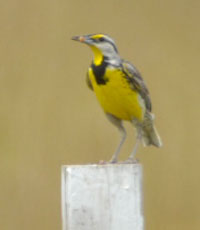
Many grassland birds, including Northern Bobwhites, Grasshopper Sparrows, Bobolinks, Eastern Meadowlarks, and Dickcissels, have experienced significant declines in recent years due to loss of habitat and changing agricultural practices, especially here in Loudoun County.
What You Can Do: If you live in a community where your HOA has a meadow area or if you are a large, or even moderate, landowner and don’t need your meadows for pasture or hay, please hold off on cutting them until later in the summer.
By doing this you will give the numerous birds that nest in tall grass an opportunity to nest and raise their young. Every year the young of these species are killed by unnecessary mowing. You don’t have to mow all that, especially every week. For more information on the native grasslands of Loudoun and the birds that you can help save, click here.
When exactly are the nesting periods for ground birds? We don’t cut for hay but do use the fields for horse pasture, which means we need to bush hog at least twice during the growing season. Is it best to cut earlier, e.g., mid-May, and then after July 15? Any guidance will be appreciated.
The issue of when to mow, or bush hog, is a complex one and we’re actually thinking of putting together a guide that will help with the decision-making. There are a number of species of birds that use fields for nesting and they don’t all start at the same time and if they loose their first nest then they’ll try a second attempt which pushes the timeline to the right.
As spring kicks off, first the Red-winged Blackbirds nest (late April), followed by the Meadowlarks(early May), Bobolinks and others into June.
Here’s a quick run-down of early egg dates for a few species. They start nest building probably a week before the eggs are laid:
- Red-winged Blackbird is April 28
- Eastern Meadowlark May 8
- Bobolink is June 20 (although there are a few record of mid-June)
If all goes well with this first brood (i.e. fields are not mowed and the nest is not predated), the young fledge by mid-July.
So, the best option is to hold off on all mowing/bush hogging until after July 15, by then the birds of the various species will be done with their nesting and have at least one brood fledged.
However, if you need to do a mowing/bush hogging in May, then it’s best to do it as early in May as you can (e.g. May 1-15). If Meadowlarks have already started nesting, they will loose that brood but will likely do a second nest attempt and I think the same is true for the Red-winged Blackbirds. In this case, if you mow in early May then it’s best to wait until the end of July to do your second mowing so that the babies of the second nest attempt have a chance to hatch and fledge.
Christine, thank you so much for your inquiry and for your desire to manage your pasture for both, the horses and the birds. I hope this was helpful – please feel free to ask more questions about this, as others may read this too and find it helpful.