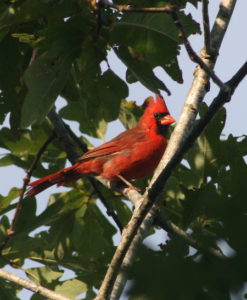
Entries tagged with “birds”.
Did you find what you wanted?
Mon 16 Aug 2010
I received a great email from one of our members in Leesburg about a bluebird nest they’d been watching at their house. Wanted to share it with you here:
From Betty:
How often does one see a bluebird hatching in a natural setting?
Luck!! For some reason, Bill decided to check on our deck rafter bluebird eggs. We witnessed a hatching! It’s hard describe the joy of watching this baby bird struggling out of his shell. Next day 3 had hatched…one to go.
Thank you Bill for the great photos!
Mon 16 Aug 2010
Posted by Nicole under Field Trips
No Comments
At the regular monthly bird walk at Banshee Reeks Nature Preserve south of Leesburg, about 18 people enjoyed a cooler morning and a flurry of activity right next to the parking lot that produced the best 20 minutes of birding of the morning, including the first of two male Blue Grosbeaks, a perched Red-tailed Hawk, Eastern Kingbirds, Pewees and Phoebes, a drop-by Red-eyed Vireo, Brown Thrasher, many Bluebirds, 2 Cedar Waxwings, Eastern Towhee pairs, Field Sparrows, and Orchard Orioles.
Later we found a pair of Wood Thrushes carrying food to a nest about 25 feet off the ground.
Early likely migrants included 2 female Redstarts.
Following is the list of 36 species:
Canada Goose,Great Blue Heron, Black Vulture, Turkey Vulture, Red-shouldered Hawk, Red-tailed Hawk, Yellow-billed Cuckoo, Red-bellied Woodpecker, Downy Woodpecker, Hairy Woodpecker, No. Flicker, E. Wood-Pewee, E. Phoebe, E. Kingbird, Red-eyed Vireo, Blue Jay, Am. Crow, Tree Swallow, Barn Swallow, White-breasted Nuthatch, E. Bluebird, Wood Thrush, Am. Robin, Gray Catbird, No. Mockingbird, Brown Thrasher, Eur. Starling, Cedar Waxwing, Am. Redstart, E. Towhee, Field Sparrow, No. Cardinal, Blue Grosbeak – 2 male, Indigo Bunting, Orchard Oriole, Am. Goldfinch
Mary Ann Good, with co-leader Del Sargent
Sun 1 Aug 2010
Dave Thomas had a wonderful experience this past spring and was kind enough to write up his observations for us here. I’ll include a few of the photos in this post but will put the full album of the 20 photos on our Facebook Album. It’s a wonderful visual chronology!
Red-shouldered Hawks Nesting at Lansdowne, March — June, 2010, by Dave Thomas
In February, a few residents of our condominium in Lansdowne (part of Leisure World of Virginia) noticed a pair of hawks being very active around a tall oak tree behind the rear parking area of our 11-story building. For those who know the area, the oak is less than 100 yards from the property boundary with our neighbor, Landsowne Resort.
The hawks took over a squirrel’s nest nicely located at a large tree fork opposite the ninth floor. They then greatly enlarged the nest and drove off squirrels that occasionally came back to look.
During March the pair evidently mated and settled in. Even before the trees leafed out, however, the interior of the nest was impossible to view, so we could not be sure when and how many eggs were laid. Much later, it became clear that one young hawk was being raised.
The twenty photographs and captions capture a fragmentary “natural history” of the story as it unfolded. Even though the photography was difficult, and still distant despite a good telephoto lens, it was a “once-in-a-lifetime” experience for us.
The photographs are selected from well over 1000, most of them sequences at six frames per second to capture fleeting moments.
For example, the snake was visible in successive photos both approaching the nest and being fed to the young hawk. Unfortunately, sharp focus is often difficult to achieve, but the events were faithfully recorded.
I thank many neighbors who watched developments carefully and kept me informed, and Loudoun Wildlife Conservancy members who identified the hawk species and nesting behavior. Finally, I have greater awe than then ever of the remarkable work done by dedicated and talented nature photographers. –Dave Thomas
Mon 26 Jul 2010
Posted by Nicole under Field Trips
No Comments
On July 24th, Del Sargent led the regular monthly Loudoun Wildlife Conservancy bird walk at the Blue Ridge Center in northwestern Loudoun Co. At the same time Marcia Weidner & Joe Coleman led a small group of Cub Scouts and their parents on a much shorter walk in both time & distance.
As Del wrote: Five very heat tolerant birders braved the hottest day this year in Loudoun County to trek the woods of the Blue Ridge Center for Environmental Stewardship. We planned our walk so that we were generally in the shade, which was basically the Farmstead Loop. The big find for the day was a family of KENTUCKY WARBLERS with very impatient young begging for food. Two Black Vultures sat on the roof of the house where they were probably hatched.
It was an int’g day w/the butterflies already active at 6 am and most birds quiet by 8 am.
Information on the Blue Ridge Center for Environmental Stewardship which is open every day of the year can be found at http://www.blueridgecenter.org. Information on the Loudoun Wildlife Conservancy many free walks and programs can be found at www.loudounwildlife.org.
A total of 36 species on both walks were tallied:
Great Blue Heron, Black Vulture , Turkey Vulture, Mourning Dove, Yellow-billed Cuckoo , Ruby-throated Hummingbird, Red-bellied Woodpecker, Northern Flicker, Pileated Woodpecker, Eastern Wood Pewee, Acadian Flycatcher, Red-eyed Vireo, American Crow, Fish Crow, Tree Swallow, Barn Swallow, Carolina Chickadee, Tufted Titmouse, White-breasted Nuthatch, Carolina Wren, Blue-grey Gnatcatcher, Eastern Bluebird, Wood Thrush, European Starling, Cedar Waxwing, Louisiana Waterthrush, Kentucky Warbler. Common Yellowthroat, Scarlet Tanager, Eastern Towhee, Field Sparrow, Indigo Bunting, Common Grackle, Orchard Oriole, American Goldfinch, House Sparrow
Sat 10 Jul 2010
Posted by Nicole under Field Trips
No Comments
Five of us birded the Banshee Reeks Nature Preserve on July 10. When we arrived the rain was still coming down pretty heavily but by 8:15 had tapered off considerably and was finished by 8:30 am. Because a lot of the birds were very wet fledglings identification was rather tough for the first hour or so and resulted in some rather int’g discussions over behavior and shape. And of course none of us had a guide with us that showed fledgling plumage well. It was a lot easier after it dried out.
The highlights at Banshee included a lot of Blue Grosbeaks, prob. more than most of us have ever seen before, including some recently fledged youngsters begging as well as beautiful adult males. We also had very healthy numbers of Common Yellowthroats, Yellow-breasted Chats, Eastern Towhees, Field Sparrows, and Orchard Orioles. Many of these were also recently fledged and begging birds.
After wrapping up at Banshee Reeks, Donna Quinn & I drove over to the Dulles Greenway Wetlands Mitigation Project where we spent a little less than an hour and found several shorebird species including four SHORT-BILLED DOWITCHERS.
The regular monthly free bird walk (every 2nd Sat) at the Banshee Reeks Nature Preserve is sponsored by the Loudoun Wildlife Conservancy (www.loudounwildlife.org) and the Friends of Banshee Reeks (www.bansheereeks.org); information on both and their upcoming events can be found on their websites. On these Saturdays, depending on the weather & the time of the year, we often visit the Dulles Greenway Wetlands Mitigation Project either before or after the Banshee walk.
Good birding,
Joe Coleman, near Bluemont, Loudoun Co
Location: Banshee Reeks Nature Preserve – MFF08
Observation date: 7/10/10
Number of species: 51
Mallard, Great Blue Heron, Great Egret, Black Vulture, Turkey Vulture, Red-shouldered Hawk, Red-tailed Hawk (Eastern), American Kestrel, Killdeer, Mourning Dove, Yellow-billed Cuckoo, Chimney Swift, Ruby-throated Hummingbird, Downy Woodpecker, Pileated Woodpecker, Eastern Wood-Pewee, Acadian Flycatcher, Eastern Phoebe, Eastern Kingbird, White-eyed Vireo, Red-eyed Vireo, Blue Jay, American Crow, Tree Swallow, Barn Swallow, Carolina Chickadee, White-breasted Nuthatch, Blue-gray Gnatcatcher, Eastern Bluebird, Wood Thrush, American Robin, Gray Catbird, Northern Mockingbird, Brown Thrasher, European Starling, Cedar Waxwing, Prairie Warbler, Common Yellowthroat, Yellow-breasted Chat, Eastern Towhee, Chipping Sparrow, Field Sparrow, Song Sparrow, Scarlet Tanager, Northern Cardinal, Blue Grosbeak, Indigo Bunting, Red-winged Blackbird, Orchard Oriole, Baltimore Oriole, American Goldfinch
Location: Dulles Greenway Wetlands Mitigation Project
Observation date: 7/10/10
Number of species: 26
Mallard, Great Blue Heron, Great Egret, Green Heron, Killdeer, Spotted Sandpiper, Solitary Sandpiper, Lesser Yellowlegs, Least Sandpiper, Short-billed Dowitcher (Atlantic), Mourning Dove, Tree Swallow, Barn Swallow, House Wren, Eastern Bluebird, American Robin, Gray Catbird, Northern Mockingbird, European Starling, Common Yellowthroat, Field Sparrow, Northern Cardinal, Indigo Bunting, Red-winged Blackbird, Common Grackle (Purple), American Goldfinch
Sun 27 Jun 2010
Posted by Nicole under Field Trips
No Comments
Seven birders joined Loudoun Wildlife Conservancy for a very pleasant bird walk at the Blue Ridge Center for Environmental Stewardship on Saturday, June 26.
We met and spent a few minutes birding the area right around the Visitor Center before and after the main walk in the central portion of the Center. Not only did we hear a Yellow-billed Cuckoo in the woods next to the Visitor Center we were entertained by a couple of YELLOW-BREASTED CHATS, one of which was very vocal and active right next to where we were tallying at the end of the walk.
Because of the heat we headed over to Arnold Rd and spent most of the morning’s walk in the center’s extensive woods and followed a variety of trails crossing Piney Run twice and Sweet Run twice as well.
We did spend about 30 minutes on the Butterfly Alley Trail along the powercut where we heard BLUE-WINGED WARBLERS, a couple more chats, and saw several butterflies – including this fresh Pipevine Swallowtail shown in the photo by Norm Gresley.
In addition to watching CEDAR WAXWINGS courting we picked up nine warbler species, including a CERULEAN, a KENTUCKY, a REDSTART, a couple of OVENBIRDS, great views of a vocalizing LOUISIANA WATERTHRUSH, and one WHITE-EYED VIREO along with numerous ACADIAN FLYCATCHERS, RED-EYED VIREOS, BLUE-GRAY GNATCATCHERS, and INDIGO BUNTINGS. As we were walking back to our cars after tallying we got great views of a GRASSHOPPER SPARROW vocalizing.
Additionally we saw quite a few butterflies species including a PIPEVINE SWALLOWTAIL, a couple of Zebra Swallowtails, several Great-spangled Fritillaries, a Meadow Fritillary, several Red-spotted Purples, a very worn Northern Pearly-eye, and a Monarch.
Joe Coleman
Location: Blue Ridge Center for Environmental Stewardship
Observation date: 6/26/10
Number of species: 56
Black Vulture, Turkey Vulture, Red-shouldered Hawk, Red-tailed Hawk (Eastern), Mourning Dove, Yellow-billed Cuckoo, Chimney Swift, Red-bellied Woodpecker, Downy Woodpecker, Hairy Woodpecker, Pileated Woodpecker, Eastern Wood-Pewee, Acadian Flycatcher, Eastern Phoebe, Great Crested Flycatcher, Eastern Kingbird, White-eyed Vireo, Red-eyed Vireo, Blue Jay, American Crow, Fish Crow, Barn Swallow, Carolina Chickadee, Tufted Titmouse, White-breasted Nuthatch, Carolina Wren, House Wren, Blue-gray Gnatcatcher, Eastern Bluebird, Wood Thrush, American Robin, Northern Mockingbird, Brown Thrasher, European Starling, Cedar Waxwing, Blue-winged Warbler, Northern Parula, Cerulean Warbler, American Redstart, Ovenbird, Louisiana Waterthrush, Kentucky Warbler, Common Yellowthroat, Yellow-breasted Chat, Eastern Towhee, Chipping Sparrow, Field Sparrow, Grasshopper Sparrow, Song Sparrow, Northern Cardinal, Indigo Bunting, Red-winged Blackbird, Common Grackle, Brown-headed Cowbird, American Goldfinch, House Sparrow.
Sun 13 Jun 2010
Posted by Nicole under Field Trips
No Comments
The 17 people who showed up for our monthly bird walk at Loudoun County’s Banshee Reeks Nature Preserve found 49 species of birds of which the highlights included singing OVENBIRDS and WOOD THRUSHES along the road as we entered the preserve, an under-birded but rich area due to the healthy understory that still exists in much of that area.
The walk itself started with excellent views of a YELLOW-BREASTED CHAT and an EASTERN KINGBIRD close to the parking lot. It was also a lot of fun to stop by the MAPS banding station and watch them band several birds.
In the woods near the banding station we had great views of both a male & female SCARLET TANAGER and in other places saw a couple of AMERICAN KESTRELS, a small flock of CEDAR WAXWINGS, heard a PRAIRIE WARBLER, and saw several ORCHARD ORIOLES as well as a single BALTIMORE ORIOLE flying over the Goose Creek.
After we wrapped up at Banshee Reeks four of us stopped by the Dulles Greenway Wetlands Mitigation Project where, because of the lateness of the hour and the heat and humidity, there wasn’t that much activity but we did add a few more birds to the list, the nicest being seven GREAT EGRETS and a Great Blue Heron in a dead tree in the middle of the wetlands, the same tree where two adult BALD EAGLES perched during our walk on Wed. morning.
We also saw a large dark shape moving around in the BALD EAGLE nest, heard two dif. YELLOW-BILLED CUCKOOS, and watched several Red-winged Blackbirds harass and COMMON RAVEN who must have come too close to their nests.
Best, Joe Coleman, near Bluemont, Loudoun Co
Location: Banshee Reeks Nature Preserve
Observation date: 6/12/10
Number of species: 49
Canada Goose, Mallard, Black Vulture, Turkey Vulture, American Kestrel, Mourning Dove, Chimney Swift, Ruby-throated Hummingbird, Red-bellied Woodpecker, Downy Woodpecker, Pileated Woodpecker, Eastern Wood-Pewee, Acadian Flycatcher, Eastern Phoebe, Great Crested Flycatcher, Eastern Kingbird, Red-eyed Vireo, Blue Jay, American Crow, Tree Swallow, Carolina Chickadee, Tufted Titmouse, White-breasted Nuthatch, Carolina Wren, Blue-gray Gnatcatcher, Eastern Bluebird, Wood Thrush, American Robin, Gray Catbird, Northern Mockingbird, Brown Thrasher, European Starling, Cedar Waxwing, Prairie Warbler, Ovenbird, Common Yellowthroat, Yellow-breasted Chat, Eastern Towhee, Field Sparrow, Song Sparrow, Scarlet Tanager, Northern Cardinal, Indigo Bunting, Red-winged Blackbird, Common Grackle (Purple), Brown-headed Cowbird, Orchard Oriole, Baltimore Oriole,American Goldfinch,
Location: Dulles Greenway Wetlands Mitigation Project
Observation date: 6/12/10
Number of species: 31
Canada Goose, Mallard, Great Blue Heron, Great Egret, Bald Eagle, Killdeer, Mourning Dove, Yellow-billed Cuckoo, Eastern Wood-Pewee, Willow Flycatcher, Eastern Kingbird, Common Raven, Tree Swallow, Barn Swallow, House Wren, Blue-gray Gnatcatcher, Eastern Bluebird, Wood Thrush, American Robin, Gray Catbird, Northern Mockingbird, Brown Thrasher, European Starling, Common Yellowthroat,, Field Sparrow, Song Sparrow, Northern Cardinal, Indigo Bunting, Red-winged Blackbird, Orchard Oriole, American Goldfinch
Thu 10 Jun 2010
Posted by Nicole under Field Trips
1 Comment
Fifteen people showed up for very damp bird walks at the Dulles Greenway Wetlands Mitigation and the Banshee Reeks Nature Preserve (BRNP) on Wed., June 9.
The highlights of the 57 species seen the on & off rain were 2 GREAT EGRETS, 2 BALD EAGLES perched on a snag in the middle of the Wetlands, 4 or 5 AMERICAN KESTRELS (several near the BRNP nest box where they successfully nested), 2 YELLOW-BILLED CUCKOO, COMMON RAVEN, WILLOW FLYCATCHERS, and at least 15 ORCHARD ORIOLES scattered through both the Wetlands & Banshee Reeks.
Best,
Joe Coleman, near Bluemont, Loudoun Co
Dulles Greenway Wetlands Mitigation Project
Number of species: 45
Canada Goose, Mallard, Great Blue Heron, Great Egret, Green Heron, Bald Eagle, Turkey Vulture, Killdeer, Mourning Dove, Yellow-billed Cuckoo, Chimney Swift, Belted Kingfisher, Red-bellied Woodpecker, Downy Woodpecker, Eastern Wood-Pew, e, Willow Flycatcher, Great Crested Flycatcher, Eastern Kingbird, Blue Jay, American Crow, Northern Rough-winged Swallow, Tree Swallow, Barn Swallow, Carolina Chickadee, Tufted Titmouse, Carolina Wren, House Wren, Blue-gray Gnatcatcher, Eastern Bluebird, Wood Thrush, American Robin, Gray Catbird, Northern Mockingbird, Brown Thrasher, European Starling, Cedar Waxwing, Yellow Warbler, Common Yellowthroat, Eastern Towhee, Field Sparrow, Song Sparrow, Northern Cardinal, Indigo Bunting, Red-winged Blackbird, Brown-headed Cowbird, Orchard Oriole, American Goldfinch
Location: Banshee Reeks Nature Preserve
Number of species: 41
Black Vulture, Turkey Vulture, Red-shouldered Hawk, American Kestrel, Killdeer, Rock Pigeon, Mourning Dove, Downy Woodpecker, Pileated Woodpecker, Eastern Wood-Pewee, Acadian Flycatcher, Eastern Phoebe, Great Crested Flycatcher, American Crow, Fish Crow, Common Raven, Tree Swallow, Barn Swallow, Carolina Chickadee, Tufted Titmouse, Carolina Wren, House Wren, Blue-gray Gnatcatcher, Eastern Bluebird, Wood Thrush, American Robin, Gray Catbird, Northern Mockingbird, Brown Thrasher, European Starling, Common Yellowthroat, Yellow-breasted Chat,Eastern Towhee, Field Sparrow, Song Sparrow, Scarlet Tanager, Northern Cardinal, Indigo Bunting, Red-winged Blackbird, Brown-headed Cowbird, Orchard Oriole, American Goldfinch.
Thu 20 May 2010
Our Ruby-throated Hummingbirds have returned and while it’s great fun to watch them come to the hummingbird feeder, it’s even cooler to watch them nectar from flowers! It’s really easy to create a hummingbird garden that will have them (and other interesting visitors like sphynx moths) zipping through your yard.
The first thing to do is select the site – you’ll want to pick a sunny site that is a little sheltered from the wind. It’s also nice to have a tree nearby that your hummingbirds can use as a perch as they take breaks between patrols of your garden.
Next, select the plants – Wonderful native plants that the hummingbirds will love include Bee Balm, Cardinal Flower, Bergamot, Penstemon, Trumpet Vine, Columbine, and Jewelweed (aka Touch-me-not).
The bright red of the Bee Balm and Cardinal Flower will be immediate magnets drawing the hummers in. In the fall, Jewelweed is a really important nectar source for hummers as they head south.
I sometimes buy annuals that are not native but still pretty and I put them in containers on our deck. Some of the plants that I select for that area are Salvia, Verbena, and Lantana – all in bright reds!
If you have a water source nearby, you can try setting up a mister that the hummingbirds can use to drink from and bath in. I haven’t tried this myself but once I do I’ll send out a blog post on how well it worked.
Some great books on gardening for wildlife that include hummingbird gardens include:
The Wildlife Gardener’s Guide to Hummingbirds, by Susan Day, et al
Attracting Butterflies and Hummingbirdsto Your Backyard, by Sally Roth
Mon 17 May 2010
I had a great time monitoring two of our bluebird nestbox trails yesterday morning and thought it’d be fun to share some of what I saw and experienced.
The two trails that I monitor are Banshee Reeks and the Dulles Wetlands. While both trails are not too large (10-11 boxes each), I took a good while doing it, and meandered my way through each trail, checking out other birds flying around, spotting butterflies in the grasses and along the forest edges, and just generally enjoying the day, oh yea, and doing frequent checks for ticks – since I didn’t want to take home too many hitch hikers.
I started my morning of monitoring at Banshee Reeks at about 8:30 and after picking up the monitoring log book and perusing the sightings from last week, I went off along the trail. It’s always exciting to peek inside the nest boxes because, while we have an idea of what we’ll see based on the previous week’s observations, stories play out over the course of the week as birds pair up, eggs are laid, boxes are fought over, and so on.
At both Banshee and the Dulles Wetlands, we have a healthy number of both Bluebirds and Tree Swallows, although the Tree Swallows seem to make up the majority of nesters.
Tree Swallows can be a pretty aggressive bird when it comes to defending the nestbox, dive bombing and chittering at our heads. All monitors are given training prior to monitoring at a trail and we always warn new monitors about the Tree Swallow behavior. Our protocol – in general – is to get in, take a peek to gather the data, and then get a good distance way from the box so to put the Tree Swallows (and Bluebirds) back at ease.
At the trail at Banshee, as of May 16, we have 23 Tree Swallow eggs, 10 Bluebird eggs and 9 Bluebird babies. At the Dulles Wetlands, we have 32 Tree Swallow eggs, 5 Bluebird eggs, 4 Bluebird babies and 5 House Wren eggs.
This is the first brood of the year for all of these species. We expect at least 1 more brood as we go through the season and then at the end of the year we’ll tally how many young were fledged from the trails across Loudoun.
Along the trails, I saw some nests that were complete and ready for eggs and some nests where there may have been disputes over box ownership, like the one in this photo which has 2 Tree Swallow eggs and 1 Bluebird egg.
Other boxes show signs of possible predation such as where I saw Tree Swallow eggs ejected from the nestbox and cracked on the ground.
We learn a lot by monitoring, not only about population trends but also about bird behaviors and the whole cycle of life. It’s quite fascinating.
For some additional views inside the nestboxes, I’ve posted a few photos from yesterday in our Facebook album.
Learn more about Bluebird Nestbox Monitoring.