

A Great Place
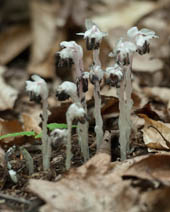
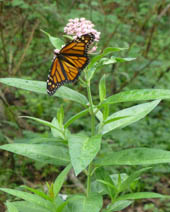
Morven Park is the place that Loudoun Wildlife Conservancy calls home. In addition to having our office at the Gatehouse, our semi-annual Native Plant Sale takes place next to the main parking lot, and we are the stewards of the ridge habitat and trails. We invite you to visit!
The ridge behind Morven Park’s mansion is the terminal end of the Catoctin Mountains and with that comes terrific and varied habitats, geological features and diverse wildlife to explore.
Walking up the Ridge Loop trail, you encounter an oak/hickory forest that gives way to beech and maple trees. Viburnum, mountain laurel, Dogwoods, Paw Paw and native grapevines provide food and habitat in the understory and the occasional stand of green briar and Sensitive ferns reveals upland wetlands.
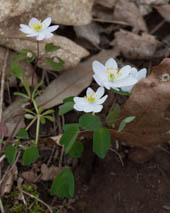
In the springtime, ephemeral wildflowers like the Harbinger of spring, Cutleaf toothwort, Rue anemone and Spring beauties cover the forest floor.
Vernal pools, some eons old and some newly restored, rest on top of the ridge and are used by frogs and salamanders through the breeding period.
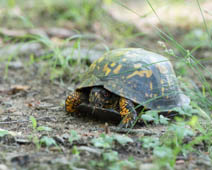
Box turtles roam the woods as do a variety of mammals that include coyotes, raccoons, opossums, bats and deer.
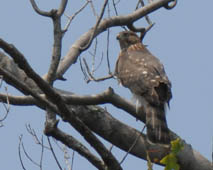
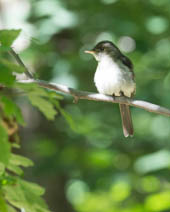
From spring through fall, wonderful neotropical birds are heard and seen: Scarlet Tanagers, warblers, Blue-gray Gnatcatchers, kinglets, Ovenbirds, and more. Throughout the year we find woodpeckers, owls, hawks, Wild Turkeys, chickadees, nuthatches and other woodland species.
Along the lowland trail, aptly named the Wood Thrush trail, you encounter more of these same birds as well as the elusive Woodcock, which calls in the early spring.
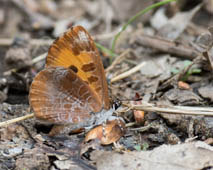
Butterflies are aplenty through the trails, fields and gardens of Morven. Visit the Monarch Waystation at the Corbell House, Carriage Museum and on Turkey Hill. This is also the only location in Loudoun where we have found both the White-M butterfly and the Harvester butterfly (pictured above).
When to Visit
Hours: The gardens and grounds are open 362 days a year from dawn until dusk. Loudoun Wildlife Conservancy offers many free guided nature walks on the trails and on the grounds. Check our calendar for details.
Trails: There are two main trails: The Ridge Loop Trail and the Wood Thrush Trail. The trails are open to the public every day from 8 a.m. until dusk, unless closed for maintenance (check the Morven Park website to ensure availability).
Facilities: Restrooms are available next to the main parking lot and at the Administration building near the Coach House. More information about Morven Park can be found here.
Driving directions: 17195 Southern Planter Lane, Leesburg, VA 20176. Click here for detailed directions and a property map.
Visit our map of other Great Places in Loudoun!